

The Role of Garment Cover Design in Corporate Identity
Corporate identity is the whole of the visual and emotional communication a brand establishes with its customers. The logo, colors, typefaces, packaging, and all promotional materials used form part of this identity. Garment covers used in the textile and ready-to-wear sectors are also among the important elements that reflect a brand’s image to the outside world. In addition to being functional packaging that protects the product, they are a powerful communication tool that conveys brand values to the customer.
A garment cover designed in line with corporate identity preserves the visibility of the brand throughout the process from production to delivery to the customer. Thanks to the logo, colors, and design details on the garment cover, the customer can easily remember which brand the product belongs to. Therefore, garment cover design should not be planned merely for placing clothing inside the product, but also to support the professional stance of the brand.
The Impact of Garment Cover Design on Creating a First Impression
Customers’ opinions about a brand often begin to form before they even use the product. How the product is packaged, how it is delivered, and how it appears during presentation directly affect the first impression. A suit, evening dress, or custom-designed garment delivered in a carefully prepared garment cover gives the customer the feeling that the product is valuable and has been prepared with care.
An ordinary or careless package, on the other hand, may reduce the perceived value of a high-quality product. In contrast, a durable, aesthetic, and brand-compatible garment cover gives customers confidence. Customers evaluate not only the clothing they purchase but also the experience presented to them. This positive feeling created by the design may contribute to brand loyalty and increase the likelihood of repeat purchases.
The Contribution of Logo Use to Brand Awareness
The logo is the most easily recognized visual element of corporate identity. A logo used on a garment cover in the correct size and position strengthens brand visibility. As the product leaves the store, is carried during travel, or is stored at home, the logo continues to be visible in different environments. In this way, the garment cover becomes a functional promotional material that can be used for a long time.
In logo application, not only visibility but also design balance is important. Logos that are too large, poorly positioned, or printed in low quality can weaken the professional appearance. The logo should be applied to the garment cover surface with a suitable technique, its colors should be used correctly, and it should not conflict with functional areas such as zippers. A balanced application allows the brand to present a confident and attentive image.
Proper Use of Corporate Colors
Colors form an important part of the emotional impact brands leave on customers. Using a brand’s corporate colors in garment cover design helps preserve visual consistency. Continuing the colors used in store decoration, product labels, websites, and social media works on the garment cover helps the brand become more easily recognizable.
However, designing in line with corporate colors does not mean covering the entire garment cover surface with the same color. A balanced distribution should be made among primary colors, complementary tones, zipper details, trims, and print areas. Simple and measured use of color often provides a stronger corporate appearance. Especially for premium products, clear and elegant choices may be more effective than complex color transitions.
The Effect of Material Selection on Quality Perception
The success of garment cover design does not depend only on visual details. The texture, thickness, durability, and protection capacity of the fabric used directly affect the customer experience. A thin material that tears easily or produces an unpleasant odor can negatively affect the brand’s quality perception, even if it has a stylish design. Therefore, material selection should be handled as carefully as corporate identity.
A material suitable for the brand’s product group and target audience should be preferred. While lightweight and practical options may be sufficient for everyday ready-to-wear products, more durable and specially surfaced fabrics may be used for wedding dresses, evening gowns, or upper-segment suits. Quality material not only protects the product but also makes the customer feel that the brand pays attention to details.
Functionality and User Experience in Garment Cover Design
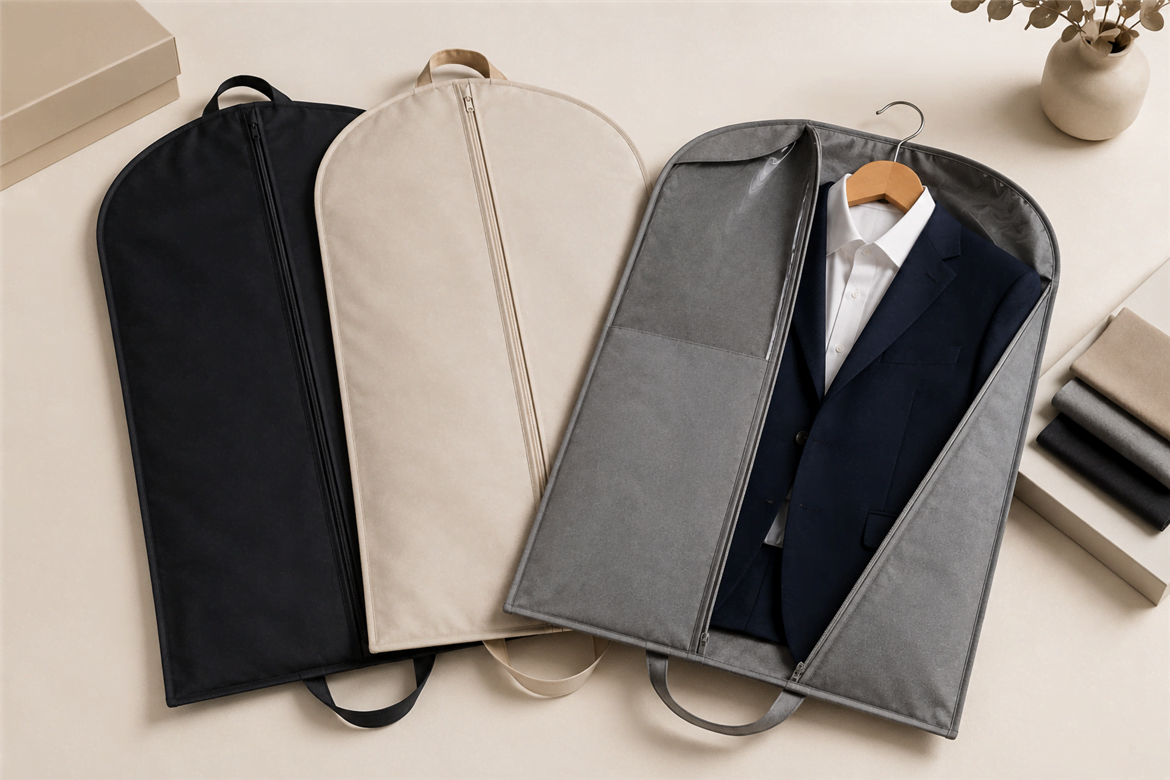
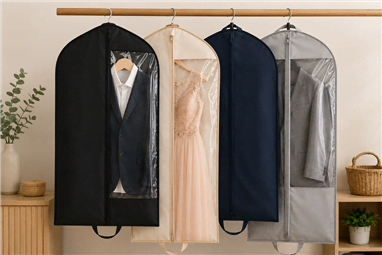
A garment cover suitable for corporate identity should be both aesthetic and practical. The zipper should open easily, the hanger section should be suitable for the garment, and the carrying handles should have sufficient durability. Additional details such as a transparent window, cardholder area, or accessory compartment can help the customer easily identify and neatly carry the product inside the garment cover.
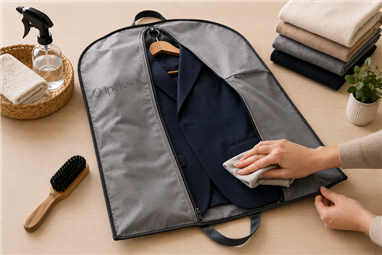
A design prepared without considering user experience may cause problems in daily use even if it is visually successful. Measurements that are too narrow may cause the garment to wrinkle, weak handles may cause damage during carrying, and poor-quality zippers may make the product unusable in a short time. The customer’s ability to reuse the garment cover comfortably helps maintain the positive relationship established with the brand.
Garment Cover Design Suitable for the Product Group
Not every garment has the same size, form, or protection requirement. There should be differences in size and material between garment covers prepared for suits and those used for wedding dresses or long evening gowns. While maintaining corporate design, the technical features required by the product group should also be taken into account. In this way, both brand consistency is achieved and the garment is properly protected.
It is possible for a brand to prepare different garment cover models carrying the same design language for different product collections. While the primary colors and logo placement remain fixed, product dimensions, window areas, or carrying styles can vary. This approach enables the brand to appear consistent and professional across all product groups. No matter which product the customer purchases, they encounter the same corporate quality.
How Custom-Designed Garment Covers Differentiate the Brand
In the highly competitive textile sector, brand presentation has become as decisive as product quality. Standard garment covers may meet the basic need for protection, but they may be insufficient to leave a distinctive brand impression. Garment covers prepared with custom measurements, different fabric textures, unique zipper details, and corporate prints help the brand stand out from its competitors.
Custom design also makes the customer feel valued. Developing special packaging for a brand’s product shows that every stage of the sales process is taken seriously. The customer’s keeping or reusing the garment cover ensures that the bond established with the brand continues even after product delivery. This bond can sometimes be strengthened by the warm and reassuring feeling created by a small design detail.
Packaging Consistency and Professional Presentation
Garment cover design should not be considered independently from the brand’s other packaging and presentation products. Using a garment cover with the same visual language as shopping bags, boxes, labels, business cards, and product cards supports corporate consistency. When customers see all materials together, they encounter an organized, planned, and professional brand structure.
This consistency becomes especially noticeable in store deliveries, fairs, special collection launches, and corporate sales. Disconnected colors and design details weaken brand identity, while harmonious materials create a strong appearance. Professional presentation may increase the value customers assign to the product and help the brand gain a more lasting place in memory.
Reusability and a Sustainable Brand Approach
Durable and reusable garment covers can support brands’ sustainability approach. A garment cover used by the customer for a long time reduces the need for single-use packaging. At the same time, the brand identity on the garment cover becomes visible again with every use. Thus, functionality, environmental responsibility, and brand promotion come together in a single product.
A sustainable approach is not limited to using recyclable materials. It is also important that the product is long-lasting, not easily damaged, and meets a real usage need. A well-produced garment cover becomes a product that the customer wants to keep instead of throwing away. This strengthens the message that the brand uses resources consciously and cares about environmental impacts.
How Should Corporate Garment Cover Design Be Planned?
Before starting the design process, the dimensions, weights, and usage areas of the products to be carried inside the garment cover should be determined. Then, the brand’s corporate colors, logo usage rules, target audience, and quality expectations should be evaluated. By considering all these elements together, the material, size, zipper, handle, window, and printing features should be planned.
Preparing a sample before production helps evaluate the design under real usage conditions. The position of the logo, print quality, the way the garment stands inside the garment cover, and carrying comfort can be checked through the sample. Making the necessary adjustments before mass production prevents cost losses and ensures a more successful result.
The Importance of Consistency in Corporate Identity
For corporate identity to be strong, a similar language should be adopted across all materials used by the brand. The logo, colors, and visual details used in garment cover design must be compatible with the brand’s overall communication. Customers should encounter the same brand character in the store, on the website, on social media, and during product delivery. This consistency makes it easier to build a sense of trust.
Frequently changing designs or garment cover models that have no connection with corporate identity may create confusion in brand perception. In contrast, maintaining a certain design standard supports professionalism. Even if the design is renewed over time, the brand’s primary colors, logo, and overall character should be preserved. In this way, the garment cover becomes modernized without damaging brand recognition.
Garment cover design suitable for corporate identity carries a much broader meaning than simply protecting textile products. A properly designed garment cover makes the brand’s quality, professionalism, and value given to the customer visible. The harmonious use of logo, color, material, and functional details ensures that the product is presented to the customer in a stronger and more impressive way.
Every product that reaches the customer delivers a silent yet powerful message about the brand. A carefully prepared garment cover helps this message contain trust, quality, and elegance. Therefore, garment cover design should not be seen as a small packaging detail; it should be considered a strategic element that completes corporate identity, increases brand awareness, and improves the customer experience.
Do Comment